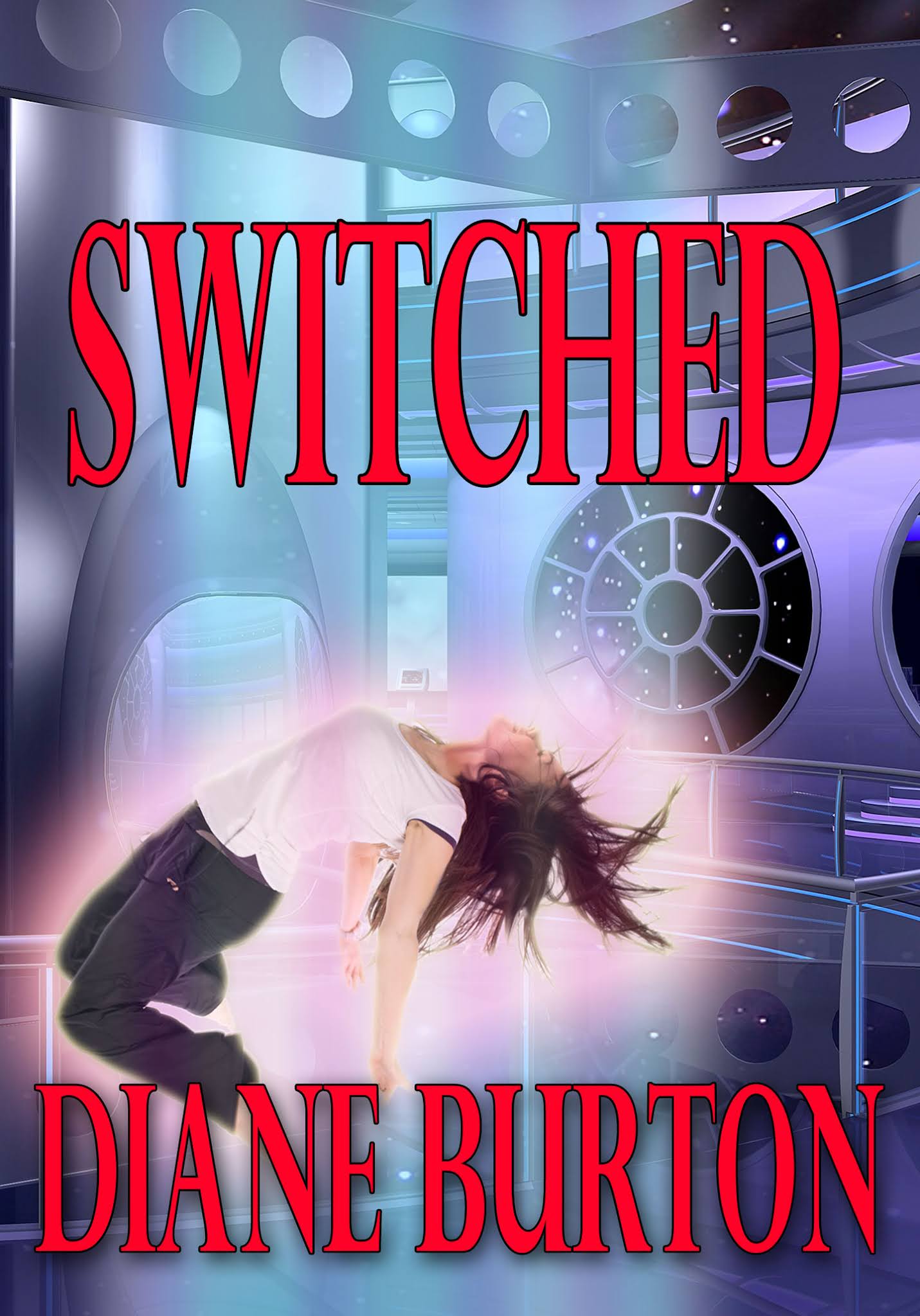
Showing posts with label Switched. Show all posts

Friday, September 1, 2023

School Days by Diane Burton


Every year from kindergarten until I was 31 years old, fall meant school. If I wasn't attending school, I was teaching. My calendar revolved around the school year. I'm still attuned to school days.

As my grandchildren head off to school this week, I'm reminded of my own school days. Kindergarten and first grade were spent in a regular school--multiple classrooms, lot of kids. Then we moved out into the country. What a difference! The school building could've been used for a TV program set in the old west. Kindergarten and all eight grades were in one room. Yep, I went to a one-room school house. My sister was in kindergarten, just her and a girl down the road. In my second grade class, there were three of us, and two were cousins.

The only person scarier than the eighth grade boys was our teacher, Mr. Nutt.* When the older boys acted up, Mr. Nutt took them back to the cloakroom where his cat-of-nine-tails ensured that discipline reigned. Talk about scary.

In third grade, the class was divided into two--kindergarten through 3rd grade students were taught in the basement, while the rest of the students were in the main classroom. By the time I was in 8th grade, my class consisted of 12 kids.

My husband's school experiences were more normal. He walked to his elementary school, whereas a bus picked me up at our driveway. He had 30-35 kids in each classroom. His experiences were more like what our kids and grandkids experienced. The only similarity between my school experiences and my grandkids is riding the bus to and from school.

My school was unique, part of the old farming community prevalent in areas west of Detroit in the 1950s. I learned more in spite of the teaching situation than because of it. I've always been a reader. And when I finished my assigned work, I listened as the teacher taught the older kids math, history, geography. My brain was a sponge. 

This year, our twins started kindergarten. Such enthusiasm. They were so pumped about school. Never mind, they went to all-day "young fives" last year. Their 3rd-grade sister is a reader. I'd say she takes after me, but everyone in the family are readers. 

I hope our kids retain that enthusiasm for school. That they never lose the wonder of learning.

What are some of your memories of school?


The picture at the top of this post is pretty close to what I remember my old school looked like. 


* Did Mr. Nutt sound familiar? Then you must have read my first science-fiction romance, Switched. Jessie says Marcus' strict demeanor reminds her of her teacher, Mr. Nutt.

Amazon

As if being kidnapped by aliens isn't bad enough, Jessie Wyndom discovers they grabbed her by mistake. She wise cracks past her fear especially when she learns she was part of an experiment separating Terran twins before birth. Her twin just took Jessie's place back in Ann Arbor, Michigan while she gets to twiddle her thumbs on an Alliance of Planets starship. The only good part is the hunky captain. Except. He's so unemotional he could be Mr. Spock's double.

Captain Marcus Viator's well-organized life is turned upside down by the free-spirited female from Earth. Problems with the starship prevent him from returning her to her home. Together, they discover treachery and true love.


Monday, November 1, 2021

World Building: Climate by Diane Burton


One of my favorite topics to blog about is world building. Some writers develop their entire world before writing a word of their story. My stories usually begin with a scene in my mind.. Since I'm more of a pantser (writing by the seat of my pants), I'll plunge into the story. My first draft looks more like a script--dialogue and stage directions. Then, I need to fill in the rest of the story. Descriptions, emotions, action. Somewhere in all this filling in, the setting must be dealt with.

Where are they?

In contemporary fiction, we tend to call it setting. In science fiction and fantasy, we call it world building. Same thing.

I love building my own world. My characters can inhabit a starship for the entire story. They may talk about their home world but never go there. A bit boring. It's even better if they go dirtside and experience the world itself--the customs, governance, geology, religions, climate, etc.

Many places on Earth experience changing seasons. Since it's my story, I decide if the planet has seasons. Or is it closer to the equator and experience the dry and wet seasons? Is the landscape lush and green or a brown desert? Does the planet have violent weather changes? 

Or . . .

Have scientists figured out how to control the weather?

In my first published novel, Switched, the hero's home world has controlled weather. Imagine how that would benefit farmers. They could plan their planting and harvesting, knowing the best times. No getting caught in a downpour while harvesting grain. No flooding immediately after planting that washes away the seeds. 

When the first settlers arrived on that planet, they had to endure violent storms, harsh climate swings, that made their lives miserable. No wonder one of the first scientific priorities was controlling the weather.

Not all climates need to be harnessed in our stories. Hey, it's our world. We can make it what we want. In my Outer Rim series, the premise is strong women on the frontier of space. Early settlers. They dealt with the climate as it is. Think about how a harsh climate affects the inhabitants. Only the strong survive. The others leave, if they can.

Since the setting for The Protector (Outer Rim Book 3) is a desert, I used extremes of desert climate found here on Earth. At the time I was writing that story, my son lived in Arizona. He sent a video of a haboob, an intense dust storm, as it blew over Phoenix. Haboobs usually last 10 to 30 minutes; some even longer. I had to use that scary experience with a twist. My dust storm lasted three days.


photo credit: Sonoran News

If the climate is controlled, who controls it? What if war breaks out over which faction controls the weather? Can you see the story possibilities?

As you develop your world, use your own experiences, especially the emotions you felt during the event. I've never been in or near a forest fire. I can't imagine the force, heat, smells, terror of a fire. Even a good imagination would find that difficult. Now, a tornado is a different story. I felt one pass overhead and, another time, experienced a straight-line wind of over 100 mph, while sitting in my car on the side of a road. Yep, I could use that experience. Hurricanes and earthquakes, no.

What about floods? Snow storms that last for days? Is your world a city, in the country, a desert, a water world? Do the people live on the surface, underground, or in domes?


credit: Mars One Project

It's not enough to just describe the climate, the characters have to experience it. You need to project your emotions into your characters and make the world real for the readers.


Diane Burton enjoys the changing climate in west Michigan. Her books can be found at Amazon and other book venues.


Wednesday, September 1, 2021

Happy Book Birthday! by Diane Burton


We often talk about how quickly time flies, how I can't believe it's September already. Here's a better one. I can't believe my first book was published 20 years ago. Yep, 20 years--back in the day when you sent a paper manuscript to a publisher, crossed your fingers and hoped for "the call." After ten years writing, submitting, getting rejections, I finally sold a book. That book, Switched, was published 20 years ago last week. 

When I wrote Switched, I was so tired of playing by the rules, writing what I thought publishers wanted. Oh, some of them did--they'd just bought something similar. Sorry. When I was feeling down, a crazy idea zipped through my mind. (Muses tell you weird things, then dare you to write it.) The crazy idea was that aliens kidnapped a woman from Earth by mistake. They really wanted a super model.

If I'd been that woman, I would've been royally p.o.'d. She was. First, she thinks it's all a joke played by her brothers and his nerdy friends. Or that that somehow they left her at a Star Trek-type convention. How would you explain it, if you'd been beamed aboard a starship? 

That book was so much fun to write. I could be silly and smartalecky through my heroine. Now, the strict straight-laced captain made Mr. Spock look like a party guy. What a great contrast. The farther into the story I got the more fun I had. Who knew someone would like it enough to buy it? Who knew that book would lead to two more? Contrary to a program by our own Nancy Gideon, I didn't plan my series, I sort of fell into it. When I finished those three books, I was so sad to leave the characters. But when a series is done, it's done.

In the 20 years since Switched was published, I've had thirteen more novels published. It was a great beginning to a career. Switched was also my first book self-published after the publisher returned my rights. 


Blurb

Kidnapped by aliens? By mistake?

Wise-cracking mechanic Jessie Wyndom gets the surprise of her life when she's accidentally transported aboard an Alliance of Planets starship. Then, she learns an identical twin who was raised on an alien planet has taken her place on Earth. They are victims of a scientific experiment that separated Terran twins before birth. Jessie doesn't believe it. This is all a gag perpetrated by her brother and his nerdy friends.

 Years of discipline enables Captain Marcus Viator to maintain the austere, emotionless persona prized on his planet, Serenia. Until he meets the bold, impertinent Jessie. She must go back to Earth before she disrupts his well-organized life. When he tries to return his unwilling visitor, he discovers the ship has left Earth's orbit--supposedly at his command. When more sabotage crops up, Marcus and Jessie must work together to protect the crew and themselves. As their attraction grows, treachery and violence force them into decisions that could separate them forever.

Switched is available at most online retailers for 99 cents.

Amazon ~ Amazon UK ~ B&N ~ Kobo ~ iTunes ~ Smashwords


Sunday, March 1, 2020

An Author’s “Bible” by Diane Burton


I’m not sure how the term “bible” became connected to writing a series of stories. I certainly don’t mean to be irreverent.

When writing a series of connected stories, how do you keep the details straight? Our own Nancy Gideon is now writing the 15th book in her By Moonlight series. I used to think writing the 3rd or 4th in a series was hard. But the 15th?

Writers who use Scrivener have a built-in method of handling details. I tried Scrivener, but this MS Word girl found it too hard to change. You know what they say about old dogs and new tricks. 😊


My first book Switched was a standalone. At first. But readers asked what happened next. Who am I to ignore readers? That’s when I learned how to note all those pesky details that sharp-eyed readers will catch if you don’t get them right. For instance, the spelling of names. Switched is a science fiction romance. The alien names are made up. (BTW, make sure you can pronounce those made-up names, too.)


While writing Switched, Too, the 2nd book in the series, I had to keep going back to the 1st book for the details. What a pain. Being a Word girl, I opened a new document and called it “details.” (Real original, right?) With Switched open, I noted each detail after the character’s name. (Maybe I should have done one of those character charts.)

Then, I needed to note places—all that world-building stuff. What planet did that character come from? Are people from the planet Tegror called Tegrors or Tegrorians?

What about methods of travel? Food, animals, plants? All part of world-building that needed to be written down and then easily found when needed.


I learned the hard way to keep track of details as I wrote the story, not (like Switched) after completion. Before starting a new story, I open a “details” document—whether it’s part of a series or not. Like my middle grade science fiction adventure. Since I already built a world in my Outer Rim series, I used that worldjust set the book on a different planet.

For my cozy mystery series (Alex O’Hara novels), I tried using a spreadsheet (Excel). It’s easier to locate characters, but I feel confined by the small squares. Until I come up with a better method, I'll keep using a Word doc for my details.

How do you keep details straight?

You can find my books on Amazon.

Thursday, October 17, 2019

Pets by Diane Burton


Do you have a pet? Have you ever had one? Growing up, I always wanted a dog. With seven kids, the last thing my mom wanted was something else to look after. Dad bought a pure-bred boxer puppy. Dumb as a post. And a runner. Whatever dog food she ate came right back up. Just what Mom wanted to do—clean up puke. One day, the dog ran off. At least, that’s what Mom said. I hope she found a good home.

As an adult, I still wanted a dog. We’ve had three. One was a cuddler, the next a runner. You can’t imagine the number of times I chased after him around the neighborhood. The last was the most well-behaved. A sweet dog who originally belonged to our son. Right now, we’re between dogs. And I miss the sound of nails on wood floor as our pet raced to the door to greet me.


In two of my science fiction series, I worked in dog-like pets. Did they resemble dogs here on Earth? Sure. Why not? One belonged to an elderly character (The Chameleon) that helped track a kidnapped victim. In my first sci-fi romance (Switched), the caninus belonged to the hero’s uncle. If I were a cat-lover, I imagine I would include a feline in my stories.


There are two reasons I thought of pets. My son and his family just adopted a Great Dane puppy. He is so cute . . . and growing like crazy every week. The other reason is the latest Pets in Space anthology (number 4). I love this series. In this new release, the pets in each story (by 13 authors) have special qualities. One is a little dog-like character who reminded me of my sister’s dog. Another is a snake, and there’s even a burrowing animal that saved a crashed starship crew from starving.


I haven’t finished the book yet. So many terrific stories—each about the length of a novella. Cassandra Chandler was on my blog last Wednesday and shared a bit about each of the stories. She will be here next Tuesday to share more about this book. Then on November 2nd, our friend and former contributor Veronica Scott will tell us even more. 

I have no monkey in that circus. I just liked the series and wanted you to know about it.

Have fun reading, no matter what you enjoy.

Do you include pets in your stories?


Sunday, September 1, 2019

Single or Muliple Genres? by Diane Burton


In Nancy Gideon’s post a few days ago, she talked about what to write after her 15-book series was done. She’s written contemporary romance, suspense, horror, historicals, but mostly paranormal romance—vampires and shifters. So, she asked our advice on what to tackle next.

Each time I finish a book, I wonder which genre should I write next. When I started writing twenty-plus years ago, I wrote contemporary romance. I’d read a lot and (arrogantly) thought I could do that. Hah! I tried writing a romantic suspense. And then, for fun, I wrote a science fiction romance. The last was my first published story. I then wrote four more sci-fi romances.

My family has always been supportive, but neither of my sisters like science fiction. I had an idea for a contemporary mystery series featuring a female detective. I knew they'd like that. I loved writing Alex O’Hara’s adventurous mysteries, with a little bit of romance to keep things interesting. I’ve written three cozy mysteries, two romantic suspense, and in between two more science fiction stories—one a romance, the other a middle grade adventure.

My writing reflects my reading tastes, a hodge-podge of genres—romantic comedy, mysteries, suspense, and, of course, science fiction. I love reading MG and YA stories. Suzanne Collins (Hunger Games), Rick Riordan (Percy Jackson), J.K. Rowling (Harry Potter), and others fascinate me with their stories for younger readers. (Where were these books when I was growing up?)


Looking back on my writing career since 2011 (when I re-released my first published book, Switched), I wonder if I made the right decision changing genres. From a creative aspect, I’ve enjoyed writing mysteries, suspense, and sci-fi. Career-wise, maybe I should have stayed with what I started—science fiction romances.

That’s the dilemma—writing what I enjoy as opposed to sticking with one genre.

What do you think?


Thursday, November 16, 2017

Twins by Diane Burton

According to Wikipedia, twins are two offspring produced by the same pregnancy. They can be identical (one fertilized egg that split in two, same placenta) or fraternal (two eggs, two sperm, separate placentas).

For years, scientists have studied twins. They look for commonalities—genetics, health, behavior, and tastes in music, food, sports, etc. They also study the differences in identical twins. Each year, twins gather in Twinsburg, Ohio for the Twins Days Festival. With so many twins in one place, this is an excellent time for researchers to study twins. The big question is which influences a person more, heredity or environment.

Back in the 1990s, I took that concept (studying twins) quite a bit further. In my science fiction romance, Switched, an unethical scientist from an alien (but human) world separated Earth twins before birth. He left one twin in the biological mother and transplanted the other twin in a mother from his planet, Serenia. (Think “beaming” the fetuses from one mother to the other.) When the authorities discovered what he was doing, they shut down his project and imprisoned him. That didn’t help those twins that survived—one on Earth and the other on Serenia.

When I wrote Switched, I made a lot of assumptions about twins. I assumed if a twin discovered the truth, she would want to find her twin and biological family. Since the project was an embarrassment to the authorities, they buried all information, including where on Earth the twins came from. But, if a person is driven to discover her origins, I imagine that person would do anything to find out.

That’s how Switched begins, with the Serenian twin beaming down (from a starship) to Earth to meet her twin. In a glitch, the Earth twin is beamed aboard the starship. With another glitch, not only does the starship leave Earth’s orbit, it ends up in another part of the galaxy. Until the starship returns to Earth, each twin has to take her sister’s place. In doing so, they discover their similarities . . . and differences.

As a mother, I wondered what the biological mother of the twins felt. In the days before ultrasound, the doctor relied on manual examinations and heartbeats through a stethoscope. But mothers have instincts. According to a pediatrician I wish I’d had for my kids, a mother’s instinct trumps an MD degree every time. Would the mother know when one of her twins disappeared? How would she feel at the birth when only one child was born? It wasn’t hard for me to imagine the answers to those questions.

Then, I wondered if she met the Serenian Twin would she recognize that he was not the child she birthed and raised? You know I had to use that in the third book in the Switched series, Switched Resolution.

Switched was published in 2001, republished with updates in 2011. Switched, Too was released in 2012 and Switched Resolution in 2013. Although my great-uncles were twins, no other twins occurred in my family. I used information about twins from the internet. A friend of mine has twins, so she became a source, too. Little did I know that twins would show up in my family again.

That’s when I learned firsthand about twins. I even got to go with my daughter-in-law for an ultrasound. How fantastic to see the two, each in his own placenta. From the beginning, one fetus was larger than the other. We joked that it would be like the movie Twins with Danny DeVito and Arnold Schwarzenegger. We were almost right. When the boys were born almost three weeks ago, one weighed 8 lbs 1 oz; the other weighed 5 lbs 11 oz. They were three and a half weeks early (not uncommon with twins). If you add the two weights together, no wonder my DIL was so uncomfortable, especially since they were standing upright.

A question I’ll never figure out is do twins communicate in utero? Were they aware of the other? Once they were born, and put into separate layettes (probably not the right word) in the hospital, did they realize they were separated? Obviously, when their mother held both together they were close enough to be aware of the other. But when one had to be transported to a children’s hospital and stayed there five days, did the other twin miss him? That sounds like a good idea for a paranormal story. 😊

As the boys grow and develop their own personalities, I’ll be watching to see if my guesses (and internet research) were close to reality.


Switched
As if being kidnapped by aliens isn't bad enough, Jessie Wyndom discovers they grabbed her by mistake. She wise cracks past her fear especially when she learns she was part of an experiment separating Terran twins before birth. Her twin just took Jessie's place back in Ann Arbor, Michigan while she gets to twiddle her thumbs on an Alliance of Planets starship. The only good part is the hunky captain. Except. He's so unemotional he could be Mr. Spock's double.

Captain Marcus Viator's well-organized life is turned upside down by the free-spirited female from Earth. Problems with the starship prevent him from returning her to her home. Fate brings them together. Treachery tears them apart. Is their love strong enough to reunite them?

Switched is available for 99 cents at Amazon ~ Amazon UK ~ B&N ~ Kobo ~ iTunes ~ Smashwords

Switched, Too
Down-sized astronaut candidate Scott Cherella leaps at the chance to go into space. He just has to pretend to be the captain of an Alliance of Planets starship. His lifelong dream quickly becomes a nightmare when sabotage erupts. To save the ship and crew he has to depend on an uptight, disapproving colleague.

The only time Veronese Qilana broke the rules tragedy resulted. She vowed never again. Now, to protect the real starship captain, she'll have to deceive the crew by helping the imposter. They must work together to uncover the saboteur and get the crew safely home. In doing so, they discover opposites really do attract.

Switched, Too is available at: Amazon ~ Amazon UK ~ Barnes & Noble ~ iTunes ~ Kobo ~ Smashwords


Switched Resolution
Actions have consequences as Space Fleet Captain Marcus Viator and NASA reject Scott Cherella discover when they switched places. Does the reserved Marcus have what it takes to imitate his smart-aleck twin? Despite help from his love, Veronese, Scott’s already been outed by two of Marcus’ best friends.

When rebels steal the ship with part of the crew aboard, Scott has to rescue them and retrieve the Freedom. The stakes increase when he discovers the rebels are heading for Earth. They know he’s a fraud and they want Marcus. The safety of the Alliance of Planets depends on Scott and his allies.

Switched Resolution, which wraps up the Switched series, takes the reader from Earth—where Marcus adjusts to a pregnant Jessie—to the starship Freedom commandeered by rebels, to the chase ship with Scott and Veronese aboard.

Switched Resolution is available at:  Amazon ~ Amazon UK ~ Barnes & Noble ~ iTunes ~ Kobo ~ Smashwords


Thursday, October 13, 2016

Love Aliens? By Diane Burton

Since I write science fiction romance (usually lumped in with paranormal romance), I don’t do ghosts, dragons, or vampires. My creatures are aliens. Not creepy ones, mind you. I’m not into scary. (I still haven’t watched Alien). Still, I love the costumes kids wear on Halloween. I wonder how many Reys, Kylo Rens, or Stormtroopers we’ll see this year.


The main characters in my SFR stories are human. Some of the secondary or tertiary characters aren’t. Characters can have purple skin and curly, indigo hair or resembling a Tasmanian Devil, like the ones in Switched. What about reptilians?  Think T-Rex with longer, stronger arms. That’s how I see some of the henchmen in The Pilot (An Outer Rim Novel: Book 1).

One of my favorite TV shows last year was Jim Henson’s Creature Shop Challenge where creature designers created puppets and animatronic characters competing to win a place with J.H.’s Creature Shop. That’s the place where designers created the aliens for Labyrinth, The Dark Crystal, and—my favorite—Farscape.

Farscape had such amazing aliens I can’t imagine trying to describe them for a story. It would take pages to accurately describe Ka D’Argo or Pilot. The adage of a picture being worth a thousand words is certainly true here.


In my stories, I can’t use a whole page to describe a creature. Readers will skim or close the book. Instead, the reader gets a brief comment or two, enough to imagine the character. A couple of weeks ago, at the Alpena (MI) Book Festival, I met the most amazing graphic artists. Not only do they write great science fiction, they illustrate the stories, too. I stand in awe of those who can draw. Painting a picture with words seems pale in comparison.

While building the worlds in my Switched and Outer Rim series, I made a conscious decision that the inhabitants of the various planets would look different. Even the human ones. Keeping all of them straight necessitated detailed notes. Not only did they look different, they had different religions, expressions, and mannerisms. Did this enhance the stories? I hope so. Our own world is diverse. Surely those who lived on different planets would also be. Do all the aliens celebrate diversity? That would be amazing…and probably impossible. Racism, ignorance, fear, suspicion. We know them well. Why would the future be any different? We can hope our main characters, at least, would not only be tolerant but embrace the diversity of others.

Switched: Kidnapped by aliens? By mistake?

When wise-cracking Jessie Wyndom is beamed from her farmhouse in Ann Arbor, MI aboard an Alliance starship, she meets a regular Mr. Spock. Captain Marcus Viator's well-organized life is turned upside down by a free-spirited Terran. Fate brings them together. Treachery tears them apart.


The Pilot: There’s no place like home . . . and he just confiscated hers. 

Life on the frontier of space is hard enough so when pirates stole Celara d'Enfaden's cargo, she vowed not to be tricked again. Determined to make an example out of indie pilots who disobey orders, Coalition Administrator Trevarr Jovano impounds Celara’s starship and cargo. If he backs down, he’ll lose respect. If she can’t deliver her cargo, she’ll default on her loan and lose her only home—her ship. More important than her ship, though, is her brother. To rescue him from a galactic gangster, she’ll even work with Jovano who is bent on avenging his wife’s murder.

Both Switched and The Pilot are on sale for 99 cents. See my Amazon author page