Showing posts with label #myths. Show all posts

Friday, November 10, 2023

Myths to Pages: Unveiling Hidden Legends by Keri Kruspe


Whenever anyone asks me why I adore paranormal romance, I’m completely honest with them. With things around us getting crazier every day, to keep what little sanity I have left I’ve got to have an outlet where I can escape in a realm where reality and imagination intertwine. A place full of captivating stories that transport me beyond the ordinary. And I’m not talking just about well-known paranormal creatures like vampires and werewolves, even though they are still some of my favorites. Besides them there exists a treasure trove of lesser-known myths, legends, and cultural folklore that are waiting to be unearthed and woven into the tapestry of the paranormal romance narratives.

Today we’ll embark on a journey of discovery and explore the art of how we can find and adapt these hidden gems into our own writing. My intent is to not only showcase how this genre is captivating readers with twists in their enchanting tales, but how we can weave them into our own stories.

At the end I’ll share some recommendations that got me started on this journey.

Unearthing Forgotten Legends
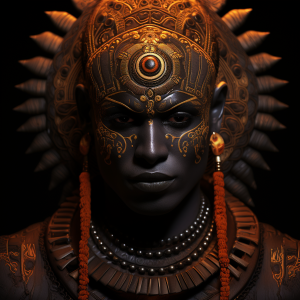
Orisha Deity


First, as a writer, how do we find new and exciting legends to delve into? In today’s ability to delve into any subject at the touch of a keyboard, it’s easy enough to examine other cultures we aren’t familiar with! Deep in the depths of thousands of ancient cultures as well as regional folklore, the world is brimming with stories that have yet to be told. If we go beyond the familiar tales of Western mythology, there are rich narratives of African, Asian, Indigenous, and other cultures. For instance, the Kitsune of Japanese folklore, shapeshifting fox spirits, offer a captivating twist on the classic shifter trope. The Yoruba tradition's Orisha deities, with their intricate personalities and powers, have intense tales that add layers of depth to any character. Just look at the thriving popularity of Japanese anime to see what I mean.

Best of all, by unearthing these forgotten legends, we can infuse any paranormal romance with a global mosaic that can’t help but attract a new base.

Weaving Cultural Authenticity

As with any new endeavor that involves a culture you aren’t familiar with, it's vital to approach them with sensitivity and respect. I know how excited I get when I’m researching a new idea. I try to understand the historical, cultural, and societal contexts where these myths originate. If you can, engage with experts and immerse yourself in their expertise. That way you not only enrich your writing but also honor the cultures that have nurtured these stories for generations.

Breathing Life into Characters


Hidden legends offer a trove of inspiration for character development. The figures within these myths often possess unique attributes, flaws, and motivations that can serve as a blueprint for any paranormal romance protagonists as well as the villains. For example, drawing from the Slavic myth of Rusalka, a water nymph can bring both love and danger to your story. She’s a complex character who struggles with her dual nature. Here’s an interplay of light and darkness that adds layers of complexity, making her more relatable and engaging to readers.


Redefining Supernatural Powers

This is one I struggle with all the time. How to I make this age-old legend and turn it into something new and exciting? Incorporating lesser-known myths lets me reimagine the supernatural powers that drive any character. The Irish Banshee, for instance, could have premonition powers that come with a haunting cost, adding depth and tension to any romantic journey.

Creating a Richer Story World

A paranormal romance isn't just about characters. It's also about the world they live in. Hidden legends can serve as the foundation for building intricate and immersive story worlds. Especially for someone like me who writes SciFi romance, a sub-genre under the paranormal umbrella. Without this key element, my romance adventures fall flat. I’ve got to work through the architecture, landscapes, and societies of other worlds that inspire my fictional settings. I may adapt elements like mystical forests, ancient temples, or ethereal realms as a backdrop where my romance unfolds. My goal is to take my readers in a world that is both magical as well as believable.

Tapping into Emotional Resonance

This is a biggie for me. One of the greatest advantages of our cultural legends lies in their ability to evoke deep emotions. Many of these stories are steeped in themes of love, sacrifice, betrayal, and longing—themes that resonate powerfully with readers. As a writer, I do my best to adapt these narratives so I can capture the essence of these emotional currents. My intent is to layer the narrative and infused them into the relationships, conflicts, and journeys of my heroes. By doing so, I strive to create a profound connection that lingers with readers long after they've turned the last page.

Conclusion

In the realm of paranormal romance, where imagination reigns supreme, the sky (or universe!) is the limit for creating boundless storytelling. By venturing beyond the well-trodden paths of popular mythology and delving into the hidden legends of cultures around the world, it’s easy to unearth a wealth of inspiration that can invigorate anyone’s writing. Keep in mind any adaptation requires diligence, respect, and creativity. But, oh the rewards are immeasurable. Now you’ll have a tapestry of characters, worlds, and emotions that captivate readers and breathe fresh life into the genre.

So, embark on this journey of discovery! Let the hidden legends guide your pen to create tales that enchant, intrigue, and touch the hearts of all who read them.

And, as promised, here is a small handful of some of my favorite paranormal romances that started me on my paranormal romance journey:


Leave your comments here... we'd all love to hear your recommendations!

Wednesday, August 10, 2022

The Hidden Mystery Behind the Vampire Legend by Keri Kruspe


For the last century, the vampire legend has been one of the western world’s most prevalent myths we can’t seem to get enough of. This creature is everywhere - in movies, books, television series, art, as well as music (Rolling Stone Magazines top 15 songs about Vampires)

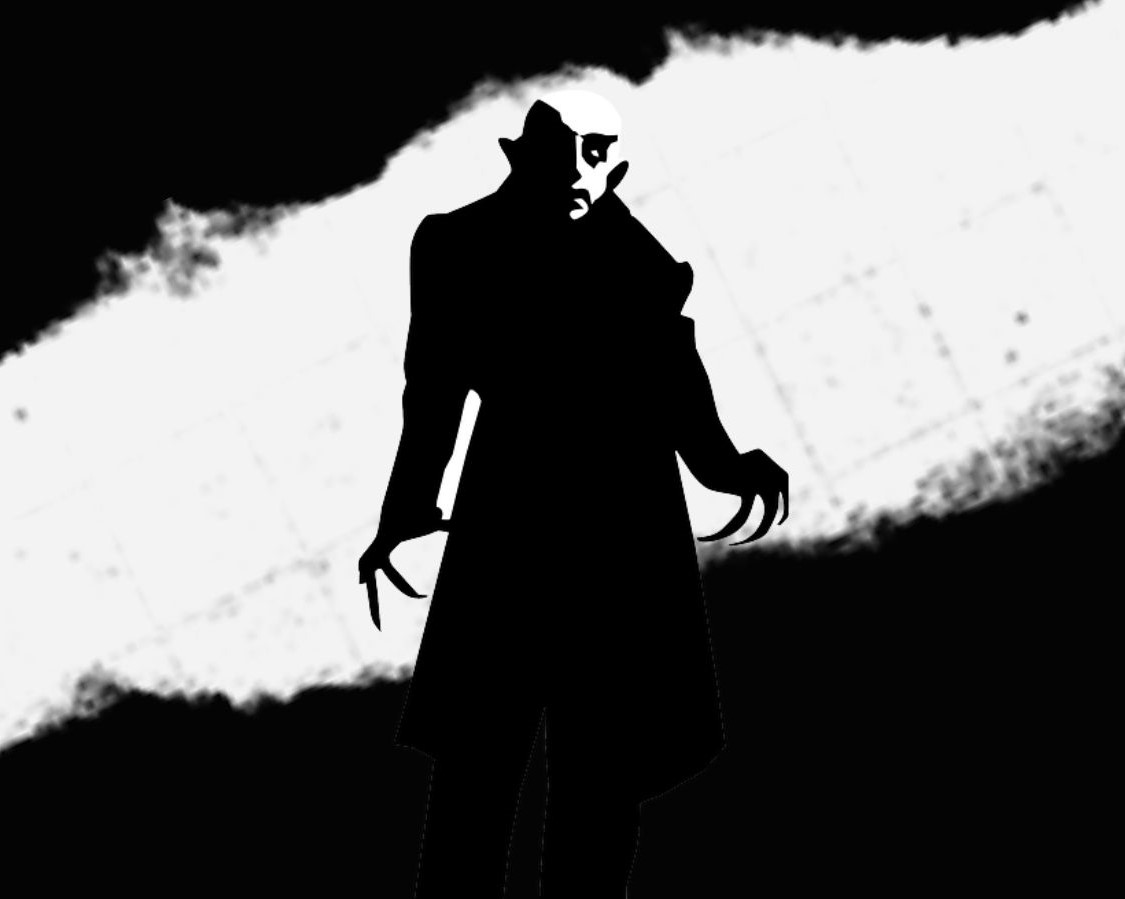
But did our fascination with this creature start with Bram Stoker’s Dracula back in 1897? Or maybe with the release of the silent movie Nosferatu in 1922? I was surprised to learn the vampire legend dated further back in our history than I’d imagined. It spans the entire globe, from the ancient Persian civilization to ancient Asia and even Iceland! In Madagascar, there is the ramanga, a living vampire who drinks the blood and eats the nail clippings of nobles (ew….).

What Is a Vampire?

According to the History Channel, there are almost as many unique characteristics as vampires as there are vampire myths. But the fundamental characteristics include draining their victim of blood, which turns them into vampires. They also “hunt at night since sunlight weakens their powers”. Some legends claim they have superhuman strength and can put their victims in a sensual thrall that hypnotizes them. Some say they cannot see their image in a mirror and they cast no shadow.

Because the vampire fable is prevalent throughout the world, I thought it would be fun to explore them and see what differences there are… and what is the same worldwide.

So take out that crucifix, wrap a smelly string of garlic cloves around your neck, and keep that vial of holy water handy. Let’s explore one of humankind’s scary monsters…

Mesopotamia - Lilitu


Wouldn’t you know it, the first vampire in history is a woman…

Now lilitu/lilu stems from several civilizations with different names—from ancient Persia, Babylon (lamashtu), as well as the early Hebrew (lilith) texts claiming she was the first wife of Adam. Apparently, she left Adam because she refused to be his subordinate and God himself banished her from Eden. She then became the queen of the demons.

In ancient Sumer (anu), she’s described as an infertile “beautiful maiden” and considered being a bird-footed night demon and described as a sexual predator who sustained on the blood of babies and their mothers.

Ancient India - Vetalas

An old Sanskrit folklore gives us the tale of the vetala, an undead creature that hangs up-side-down on trees on cremation grounds and cemeteries. They also have the pishacha, described as returned spirits of evil-doers or insane people who bore vampiric abilities (flesh-eating demons) described having bulging veins and protruding red eyes.


Albania - Shtriga and Dhampir

A shtriga is a vampiric witch that sucks the blood of infants while they sleep. Once satisfied, they will turn into an insect, like a moth. She’s often described as a hag of a woman, her face disfigured with a hateful stare. Her choice of dress is a cape. After draining her victim, she’d go into the woods to regurgitate her bounty.


A dhampir is considered as the offspring of a vampire and a human mortal. Like a vampire, they suffer from the impulse to drink blood. They just control it better. A dhampir must feed on blood, though not as often as a vampire. Their abilities vary depending on the parents’ abilities and their talents in skills or magic. They are naturally strong, sharing traits of vampires like claws and fangs.


Iceland - Draugur


These nifty creatures are part of the undead category. They possess superhuman strength and were hideous to look at. To make matters worse, they reeked of decay. They could enter dreams of the living. They also credited draugar with magical abilities, such as shapeshifting, controlling the weather, and seeing into the future.

Asia

A lot of the modern vampire lore is based on older folklore there. Throughout the large continent, there are tales of ghoulish entities from the mainland that also drifted to the surrounding islands. While Japan doesn’t have a history of vampires, they have the nure-onna which resembles a reptilious creature with the head of a woman and the body of a snake who feeds on humans. 


In the Philippines, there is the tagalog mandurugo – “blood sucker”. In Malaysia – there is the penanggalan, a bloodsucking witch who takes the form of a floating disembodied woman’s head with its trailing organs still attached. And in Cambodia there is the krasue, who is quite similar to the penanggalan.


In China, a jiāngshī is a hopping vampire. It’s a type of reanimated corpse that has long, curved fingernails and greenish-white furry skin.

A Theory on How the Legends Began

I believe legends started when humanity became self-aware and conscious of the ever-changing world around them. It had to be hard for them to understand why certain things happened the way they did. To combat their fear, they’d make up stories to explain them.

One theory of how the vampire lore began is based on a medical one. There is a blood disorder called porphyria. In the article “Vampire Myths Originated with a Real Blood Disorder”, the writer points out the major symptoms of those who suffer from this disorder:

Sensitivity to sunlight—led to facial disfigurement, blackened skin and hair growth.

Fangs—repeated attacks of the disease cause the gums to recede, making the exposed teeth appear to lengthen.

Blood drinking—a person suffering from porphyria might pass blood in their urine, making people think they drank blood for that to happen.

Aversion to garlic—the sulfur content of garlic has can lead to contracting this disorder.

No reflection—Most folks who suffer from facial disfiguration avoid mirrors.

Fear of the crucifix—I’d rather not go into the religious implications of people afraid of the crucifix. Let’s just say any unfortunate person who had this disorder back in the Inquisition days (1478-1834) would have reason to fear any symbol that meant death for them.

I Vant to Drink Your Blood...

No matter how it started, the legend of the vampire is more popular than ever. And I doubt its appeal is going to die down anytime soon. Even I, who write SciFi Romance, couldn’t resist having this creature as one of my hunky alpha heroes.


In my newest release: Alien Legacy: The Vampire, Zamush has the traits of a typical vampire because he’s part alien. I fell in love with his brooding outlook on life and how nothing seemed to touch him. Until he meets Jelena—a woman who was just like him. Too bad she believes she was in love with a man she hadn’t met yet….